Friday, January 24, 2020

Book review: Circe, by Madeline Miller, Little, Brown and Company

Circe is a goddess of Greek mythology, the daughter of Helios, god of the sun. She has the power of witchcraft – the ability to transform her enemies into animals with the help of herbs and spells.
Madeline Miller, author of The Song of Achilles, another novel based on Greek mythology that won the Orange Prize, has taken Circe’s mythology and turned her into the central character in an epic novel.
Early on, Circe is banished to a deserted island, where she lives with animals as her only company. Miller adeptly weaves together various Green myths to create the story of Circe. Readers are fortunate to encounter characters like Hermes, Zeus, the Minotaur, Icarus and Odysseus in this story of loneliness, love and loss.
I’m a sucker for anything to do with Greek mythology and although this book sat on my shelf for more than a year waiting for me to crack it, once I did, I devoured it. There’s non-stop action, coupled with universal archetypes and the literary deliciousness that all myths embody.
When the familiar stories come along, it’s as though we’ve heard them 1,000 times before, but with each storyteller comes a new twist, a deeper understanding.
Miller is skilled at such twists and insights. Her Circe is a force on Earth and a character worth knowing.
I haven’t read The Song of Achilles, but it’s now high on my list.
Tracy.sherlock@gmail.com

Mini book review: The Dutch House, by Ann Patchett, HarperCollins

This is a story of a brother, Danny, and his sister, Maeve, and the unbreakable bond between them. Ann Patchett is such a gifted writer that readers will find their own familial relationships reflected here, without consciously realizing the similarities.
There’s an absentee parent, a cold step-parent, a loving father who is fundamentally flawed, a man who sort of lets life happen to him rather than making any of his own choices and a woman who is strong, but alone and stoic.
How they relate to each other is what makes this novel the success it is. The house itself – although central – is really irrelevant. Readers will travel with Danny and Maude through childhood, the teen years and well into adulthood.
The Dutch House has been lauded by many and is a No. 1 New York Times bestseller. Patchett has written seven novels and three non-fiction books. As always, in The Dutch House, she is both funny and touching, sentimental but wry. Readers won’t go wrong with this one.
Tracy.sherlock@gmail.com

Saturday, December 21, 2019

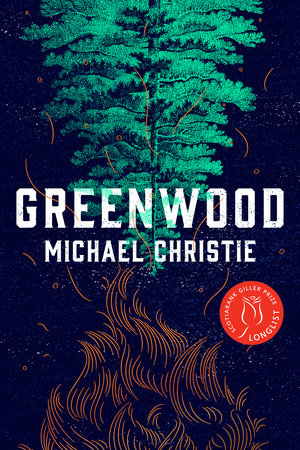
Book review: Greenwood, by Michael Christie, Penguin Random House

Read this book. Whether you're a budding environmentalist, a downright tree hugger or neither of the two, give it a go.
I opened this book on holiday in Tofino, knowing I had just two days to read its 512 pages before it was due back at the public library. I thought I would give it 50 pages and if I didn’t like it, I could return it. If I loved it, I could either buy a copy or keep it a few days overdue.
As it happens, neither choice was necessary because I devoured it over the two days.
Written by B.C. author Michael Christie, it’s a sweeping family saga, that begins at the turn of the 20th century and ends in 2038. But the story structure is round, like a tree, so it starts where it ends and the middle is the beginning.
We begin with meeting Jake Greenwood, a tour guide in one of the world’s last remaining forests, which happens to be on an island just off the coast of British Columbia. She’s in deep debt with student loans and just barely surviving in the dystopian world of 2038. But she is ever so much more than that, as the reader learns with each ring of the tree. Like all of us, she is the product of everything, both good and bad, about the generations who came before her.
Readers will take a peak into the life of a present-day carpenter who uses salvaged wood to decorate high-end homes and restaurants. They’ll learn about a life-long hippie save-the-forests protester who gave up a fortune and lived in her Westphalia van for her entire adult life. They’ll learn about a West Coast lumber baron, who made his millions thanks to others – both the trees and his own family. And they’ll learn about a veteran of the First World War, who comes home to a life of PTSD and a life on the run, living on trains during the Great Depression.
They’re all spectacularly linked and readers will delight in finding out exactly how and why.
The theme of family – what it means, how they’re formed, the forces that shape them – is woven throughout the story.
How important is DNA? More important than our parents’ and grandparents’ lived experience and traumas? Do those traumas shape us or make us stronger? Those are questions Christie explores in this deep, but extremely readable novel.
This book was longlisted for the 2019 Scotiabank Giller Prize and was chosen as a CBC Best Canadian Fiction title of the year, both with good reason.
Michael Christie’s first book was The Beggar’s Garden, a selection of short stories, based in Vancouver, which won the City of Vancouver Book Award. His second book was If I Fall, If I Die, also nominated for a number of awards. He’s a former carpenter and homeless shelter worker, who lives in Victoria and on Galiano Island.
Greenwood is a brilliant book, for its story, its structure and the timeless questions it explores.

Wednesday, October 30, 2019

Mini book review: Where the Crawdads Sing, by Delia Owens, PenguinRandomhouse

I’m late to the party about Where the Crawdads Sing, by Delia Owens, which has been out for more than a year and was on top of the New York Times bestseller list for 20 weeks. But, as the saying goes, better late than never. Speaking of late, this one kept me up all night. Even though it’s a cliché, I could not put this book down once I started it.
It’s the story of Kya, a young girl who is abandoned by her family, one-by-one, before she’s 10 years old. Her dysfunctional and abusive family lived in the marches of North Carolina, in a shack. Tragedy splits them apart, but Kya stays. She fends for herself, barefoot, penniless, alone.
Kya’s story is fascinating in itself, but it’s interwoven with a 1969 murder mystery that unfolds in alternating chapters. A local handsome and popular young man, with an penchant for sleeping around, who is rumoured to have been involved with Kya, is found dead, setting off a compelling whodunit.
Although she’s isolated personally, Kya is deeply connected to the natural world, something that is beautifully expressed in Where the Crawdads Sing. Author Delia Owens had already co-written three bestselling non-fiction books about her life as a wildlife scientist in Africa, so the connection to the natural world isn’t just a fluke.
This is a fully satisfying murder mystery, interwoven with an engrossing tale of a young girl who survives despite having to fend completely for herself. It’s irresistible.

Mini book review: The World That We Knew, by Alice Hoffman, Simon & Schuster

A little Alice Hoffman, anyone? In The World That We Knew, Hoffman writes about the French Resistance during the Second World War, but in her particularly special way. Fans of Hoffman – who is one of my favourite writers – will know she always mixes in a little magic into her stories of families, women and love.
And The World That We Knew is no different. It tackles one of mankind’s darkest hours, but tells the story through women’s strength, resilience and power.
Hoffman’s name may not be a household word, but she has written more than 30 novels, including Practical Magic, which you might remember was a 1998 movie starring Sandra Bullock and Nicole Kidman. The World That We Knew is one of her best.
The story begins in Berlin, where a Jewish mother sends her 12-year-old daughter away for her only chance at safety, even though it breaks her heart to do it. The mother sends her daughter off with the protection of a female magical Jewish creature called a golem, created from clay with the help of a Rabbi’s daughter.
The daughter, the Rabbi’s daughter and the golem travel to France, spending the fateful final years of the Second World War intertwined with the French Resistance. It all comes together in this story of love, heartbreak, sacrifice and more. Did I mention there is a heron involved? Enjoy.

Sunday, August 11, 2019

Mini book review: Ask Again, Yes by Mary Beth Keane, Simon and Schuster

Looking for a sweeping family saga filled with memories, love and heartbreak to read this summer?
Look no further – pick up Ask Again, Yes by Mary Beth Keane at your local book store and enjoy 388 pages of superbly relatable story. Ask Again, Yes is the tale of two families growing up next door to each other in suburban New York. It starts in the 1970s when the two fathers are young men, starting out as cops in New York City and follows them through marriage and all the way into old age.
In between, there’s love, of course. There’s also much more – mental illness is a key theme, as is addiction. Memories, abandonment and forgiveness play notable roles in this narrative.
But it’s the way Keane puts readers right inside the everyday lives of her characters that makes this novel special. We follow them to Little League games, to college classes, to the playground, all the while privy to their innermost thoughts. And Keane, who lives in New York and has written two other novels, is gifted at giving readers authentic characters who will remind them of themselves.
This one will stick with you long after you’ve read the last page.
Tracy.sherlock@gmail.com


Monday, July 15, 2019

Summer reading list: Two juicy mysteries and two au courant memoirs


I haven't reviewed any books in nearly a year, so here's an attempt at catching up!
Here are links to four reviews of books I've read in the last few weeks -- two juicy mysteries and two au courant memoirs.

Mini review: Inheritance, by Dani Shapiro, Penguin Random House - read this memoir if you're thinking of getting your DNA tested! Read my review here.

Mini review: A Mind Spread Out on the Ground, by Alicia Elliott, Penguin Random House - read this if you're interested in reconciliation. If you're not, there is even more reason to read it! Read my review here.

Mini review: Big Sky, by Kate Atkinson, Penguin Random House - Jackson Brodie lovers rejoice - he's back! For Atkinson fans and newbies, a romp of a modern mystery. Read my review here.

Mini review: Conviction, by Denise Mina, Hachette - part grand escape, part private eye meets podcaster novel, this one's a page turner. Read my review here.

And finally, although I've already passed the books onto a friend and didn't review them, I want to put in a recommendation for Sally Rooney's two novels: Conversations with Friends and Normal People. I read Normal People first, loved it, and immediately ordered Conversations with Friends, which I also loved. Rooney is an Irish writer and very interesting to read.

tracy.sherlock@gmail.com


Mini book review: Conviction, by Denise Mina, Hachette

This book is a tour de force. Denise Mina, Scottish author of 13 novels, keeps getting better and better. In Conviction, Mina hits us with action right from the first page. Anna McDonald, mother of two married to an older lawyer, gets hit with bad news first thing in her morning. Her husband is leaving her, to go off with her best friend, and taking their two daughters with him.
McDonald is shocked and distressed, but doesn’t fight back. Readers know why, right from the get go – it’s because she has been living under a false identity throughout her marriage and cannot travel without a passport.
McDonald escapes through a true crime podcast, which serves as a handy storytelling device for Mina to give readers the necessary background. The podcast is about a wealthy family, killed in France when their yacht mysteriously sinks. Podcast chapters alternate with real-time chapters about McDonald’s shock and distress in the opening parts of the book.
Soon, though, McDonald and a friend, Fin Cohen, an anorexic former rock star, are off on a grand adventure, one part running away another part determined to solve the mystery of the sunken yacht, which is, of course, linked to McDonald’s surreptitious past.
At times, Conviction seems a tad formulaic, particularly in the page-turning nature of some of the chapters. But the formula succeeds thanks to Mina’s storytelling skills – you won’t be able to put it down.
See other book reviews here.
Tracy.sherlock@gmail.com

Mini book review: Big Sky, by Kate Atkinson, Penguin Random House

Fans of Jackson Brodie can rejoice – he’s back chasing bad guys in Big Sky, Kate Atkinson’s latest novel. It’s been nine long years since the last Brodie caper and it’s been a long wait. Not that I’m complaining – Atkinson wrote some glorious novels in the interim, like Life After Life and A God in Ruins. But it’s damn good to have Brodie back.
He’s still a private eye – this time chasing an unfaithful husband to get proof of his infidelity for his wife – but more meaningful, if unpaid, work awaits. There’s a human trafficking ring operating underground just beneath the surface of the seemingly quaint, but slightly sleazy, seaside village, complete with pier attractions, where Jackson finds himself. He’s father to a growly teenage boy and a young woman about to be married.
As always, Atkinson packs so much into this novel that it begs to be read twice, just to catch all the finer details. But even for casual readers, this mystery is a joy. The characters are strong, including Crystal, a trophy wife, Reggie, a police detective who was a nanny in an earlier Brodie novel, and a pragmatic teenage boy named Harry, who works backstage at two of the pier attractions, most notably in the dressing rooms of drag queens and an aging, angry comedian.
The murder is almost a side note in this caper, but it does tie together the many subplots. When writing Brodie, Atkinson is always hilarious, but also profound. Little tidbits of depth – like one throwaway sentence when Jackson ponders the afterlife – are sprinkled throughout, adding to the reader’s experience.
Tracy.sherlock@gmail.com

Mini book review: A Mind Spread Out on the Ground, by Alicia Elliott, Penguin Random House

Reconciliation is a buzzword in the lexicon of Indigenous relations in Canada. In the memoir A Mind Spread Out on the Ground, author Alicia Elliott takes readers right into the heart of why reconciliation matters.
She is Indigenous, from the Six Nations of the Grand River, in Ontario. She grew up on the rez, in a two-bedroom trailer, with four siblings and her parents. Elliott goes deep, writing about mental health, suicide, residential schools, Indigenous child welfare and its relation to neglect or poverty, teenage pregnancy, sexual assault, racism and much more.
In a series of essays, she relates these big issues to her own life, while also linking them to global history and current events. There’s also an essay set in Vancouver, where Elliott was
the 2017-18 Geoffrey and Margaret Andrew Fellow at the University of British Columbia.
I don’t want to make the book sound depressing. Yes, it does take on tough subjects, head first with no holds barred, but it’s also compelling, funny and modern. It’s also hopeful. Consider this passage, an idea attributed to nehiyaw writer Erica Violet Lee: “If historical trauma is strong enough to alter our DNA and remain in our bones for generations, then there is no question in my mind that the love of our ancestors is in our DNA and our bones as well. The memory of that love is strong enough that it still exists in us.“
Canada is in a moment – a moment where reconciliation can go right or wrong. Readers who want to know more about why it’s crucial, need look no further. Read this book.
Tracy.sherlock@gmail.com


Mini book review: Inheritance, by Dani Shapiro, Penguin Random House

Who’s thinking about getting their DNA tested? If you are, be prepared for surprises.
In Inheritance: A Memoir of Geneology, Paternity and Love, author Dani Shapiro gets slammed with the shocking news that her father isn’t biologically related to her. She’s always been deeply connected to her father, and through him, her Jewish faith. But the DNA results make sense: she’s also the only blonde in her family and has been told repeatedly throughout her life that she doesn’t look Jewish.
Shapiro is a gifted writer – Inheritance is the first book I’ve read by her, but immediately after I finished it, I bought another one of her four memoirs and devoured it too. She’s also written five novels and has worked as a journalist.
I highly recommend this memoir for all readers, but if you’re considering a DNA test, it should be required reading. She not only explains the process, she deeply explores the ethics involved and the meaning of parenthood, love and culture.
Tracy.sherlock@gmail.com

Thursday, September 20, 2018

Book review: The Lost Flowers of Alice Hart by Holly Ringland

The Lost Flowers of Alice Hart
By Holly Ringland

Anansi

They say you can never judge a book by its cover, but in the case of The Lost Flowers of Alice Hart, they’re wrong.
The cover is beautiful and complex – so is the story inside. The cover has a black background that is bursting with about 20 different varieties of colourful flowers. The story inside is dark – yes, it is – but it has flowers – beautiful, light, sensual flowers – as its backbone.
The Lost Flowers of Alice Hart is the story of Alice Hart, beginning from her early childhood. She’s growing up in Australia, but not the everyday version of Australia. Something is very wrong in her life – she doesn’t go to school, her mother is troubled, her father is angry. Eventually, a traumatic event separates Alice from her parents forever and she goes to live with her grandmother, June. Because of the dysfunction, she had never met her grandmother before.
June lives on a flower farm called Thornfield, where she teaches Alice the language of flowers, or the hidden meaning behind each species of flower.
Alice grows up not knowing the truth of her childhood, but the truth is always there, following her, shaping her personality. When she’s betrayed as an adult, the trauma of the earlier events rises back to the surface, causing Alice to completely change her life.
There is a sense of magic, of fate, in this novel. As I was reading it, I was reminded of the style of one of my favourite authors, Alice Hoffman. Later in the book, author Holly Ringland uses a quote by Hoffman to begin a chapter. In an author’s note at the end, RIngland thanks Hoffman for encouraging her and says, “Thank you for writing the books that I have carried with me around the world, they have shown me the way to be brave and to believe.” So clearly, Hoffman was an inspiration and it shows. In a good way.
The Lost Flowers of Alice Hart hooked me in from the first page. Towards the end, it kept me up late turning pages. It’s a beautiful story, lovingly told.
Tracy.sherlock@gmail.com


Sunday, September 16, 2018

Book review: Transcription by Kate Atkinson

Transcription
By Kate Atkinson
Doubleday Canada

Anyone who follows my book reviews knows that Kate Atkinson is right at the top of my list of favourite authors. I loved her Jackson Brodie mysteries – please may she write another one! – but her other novels have also ranked way up there. Life After Life was such an incredible achievement, that I am still in awe of it five years after reading it. A God In Ruins was nearly an equal accomplishment. Her first novel, Behind the Scenes at the Museum, captured my imagination immediately and I’ve got a permanent and recurring note to self to reread it and every one of her books. So yes, I’m a fan.
Atkinson’s latest novel is Transcription, the story of Juliet Armstrong, a young woman who is mysteriously recruited into the secret service in London during the Second World War. She finds herself responsible for transcribing conversations between a British agent who is posing as the leader of a group of German sympathizers.
It goes even further when Juliet is asked to become a spy. She leaps right in, going undercover as Iris Carter-Jenkins, an alter identity who is tasked with infiltrating an upper-class friend group who may or may not be on Germany’s side.
Much of the novel feels like a lark — an adventure that Juliet has been thrust into, with little experience or training. She manages to scrape by – barely – but gets herself into plenty of pickles along the way.
Juliet is a literalist and Atkinson has some fun with language via Juliet’s thoughts. When Juliet overhears the question, “Cat’s got your tongue?” She thinks to herself: What an awful idea. … How would the cat get it – by accident or design?
Much of the novel takes place in Juliet’s inner dialogue, and that’s a fine place to be. Juliet is quite hilarious at time and she’s both clueless enough and intelligent enough to make the story interesting.
And when the story comes around to serious business – the business of murder and treason – it makes a very satisfying read indeed.
The book opens in 1981, when Juliet as an older woman has returned to London. She’s been hit by a car and is reflecting on her life. A couple of snippets from that early chapter reveal Atkinson’s wit and style.
“It was all such a waste of breath. War and peace. Peace and war. It would go on forever without end,” Juliet thinks to herself. Later, she thinks: “There was to be a royal wedding. Even now, as she lay on this London pavement with these kind strangers around her, a sacrificial virgin was being prepared somewhere up the road, to satisfy the need for pomp and circumstance.”
Atkinson based the novel on an MI5 document describing a wartime spy, who lived a regular life as a bank clerk. MI5 released documents including transcriptions of the spy’s conversations that made Atkinson curious about who might’ve typed them. Thus Juliet was born. And readers everywhere will benefit from that.
Atkinson will be appearing in Vancouver on Saturday, September 29 at 7:30 p.m. at St. Andrew’s Wesley United Church, 1022 Nelson Street. Tickets are available through the Vancouver Writers Fest.
Tracy.sherlock@gmail.com


Thursday, August 30, 2018

Book review: Warlight by Michael Ondaatje

Warlight
By Michael Ondaatje
McClelland & Stewart


The latest novel by Michael Ondaatje returns to the Second World War, a time he brilliantly illuminated in The English Patient, his 1992 novel which this summer won the Golden Man Booker Prize as the best of all Booker Prize-winning novels.
While The English Patient took place in Italy and North Africa, Warlight takes place in the decade just after the war in London. Two teenagers, Rachel and Nathaniel, are left behind by their parents, who move mysteriously to Singapore. They’re left in the care of a man they call The Moth, a man with an interesting cast of friends who take the children under their wing.
Later, their mother returns, under even more mysterious circumstances, with no sign of their father. As Nathaniel grows up, he tries to piece together his past to make sense of his teenage years.
Warlight is a complex story, in which nothing is quite as it seems. It’s a mystery, a spy story, a coming-of-age story and a tale of family bonds, but it’s not a novel that easily fits into any of those boxes. Ondaatje takes readers into the shadows of memory and time, occasionally bringing us into the conversation, but at other times leaving the details to our imaginations.
Warlight is beautifully written novel with a story that is exquisitely told by Ondaatje.
Tracy.sherlock@gmail.com

Book review: The Possible World by Liese O'Halloran Schwarz

The Possible World
By Liese O’Halloran Schwarz
Simon and Schuster


This novel brings together three seemingly disconnected stories – an emergency room doctor, an elderly woman in a care home and a young boy suffering with anxiety – and brings them together in a complex and compelling story.
Lucy is the ER doc, who finds herself newly single as she works a gruelling night shift schedule. Ben is the young boy, who witnesses a brutal murder and appears to have amnesia due to the shock. Clare is the elderly woman, who might be the oldest person in her small town at nearly 100 years old, but who also appears to have no evidence of her birthdate.
This is not a murder mystery – the perpetrator becomes known quite quickly and simply after the crime. Rather, it is a story of life – three lives to be exact – and how people can form connections and how they can lose those same connections.
O’Halloran Schwarz is an emergency-medicine doctor herself, working in Chapel Hill, North Carolina. Readers will recognize the accuracy in her descriptions of what it’s like to work an ER, including one hilarious scene that is sure to surprise.
Not only did The Possible World make this reviewer laugh, it also made me cry in its universal wisdom about the bonds between us and how ephemeral or enduring they can be. A beautifully written novel, The Possible World is a story that will enrich its readers.
Tracy.sherlock@gmail.com


Monday, April 23, 2018

Book review: The Punishment She Deserves, by Elizabeth George

The Punishment She Deserves
Elizabeth George
Viking

Elizabeth George is a perennial favourite of mine – I’ve been reading her mysteries for 30 years now, and I don’t think there has been one I haven’t enjoyed.
The upright, proper Detective Inspector Thomas Lynley and his brilliant-but-unconventional sidekick Detective Sergeant Barbara Havers are always a pleasure to follow around the British countryside, solving whatever murder they happen to be working on.
This time, the mystery is the apparent suicide of a church deacon who had been arrested after claims of child molestation. On first glance, it appears obvious that he killed himself while in police custody, but a closer look shows many unusual happenings in the small medieval British town of Ludlow.
Regular readers will love The Punishment She Deserves, for its focus on Lynley and Havers, who solve a traditional crime with lots of sordid details and side notes. Newcomers won’t be lost in the back story and can jump right in. George lives in Washington State, but usually sets her mysteries in England.
For the first 200 or so pages – the length of a regular novel – Havers is inspecting the suicide with Isabelle Ardery, the Acting Superintendent who is dealing with a bit of an alcohol problem. Ardery’s story is interesting, but I was beginning to wonder if the author had tired of Lynley and his story. But thankfully, Lynley is at the heart of part two of the book, which clocks in at another 500 pages. Yep, this is a long book. But it’s worth it.
There’s a bit of a treatise on motherhood hidden within the pages of this murder mystery. I won’t go into too many details, except to say that readers will meet a neglectful mother, a mother who is unable to let go and a mother who is unable to stop hovering. Throw in a bit of foreign culture, a bit of religion and a bit of the freedom and damage of the first couple of years of college and you’ve got the makings of a superb murder mystery.
The only complaint I have about Elizabeth George’s mysteries is that the back story – the story of Lynley, Havers, Simon, Deborah, and all of the other characters – moves so slowly. By my count, Deborah and Simon have been trying for a baby for several decades, but they’ve barely aged.
Moving their story slowly means readers keep coming back for a little tidbit about how these characters they love are doing, but it also means readers can be disappointed with little progress.
After 30 years of Lynley, faithful readers should know not to expect a whole bunch of personal details. The Punishment She Deserves is nonetheless a delightful read, and one that brings the series back to its traditional roots. We will just have to wait for the next one to find out the gossip.
tracy.sherlock@gmail.com

Wednesday, April 11, 2018

Book review: Every Note Played by Lisa Genova

Every Note Played
Lisa Genova
Simon & Schuster Canada


Lisa Genova has done it again – written a brilliant, but terrifying, book about the human brain.
Her first book, Still Alice, was made into an Oscar-winning movie about a professor struggling with early onset Alzheimer’s disease.
Since then, she’s tackled the subjects of brain injury, autism and Huntington’s disease, all through human stories that reflect triumph and tragedy.
This time around, she explores ALS – Amyotrophic Lateral Sclerosis – a brain disease that slowly paralyzes a person so they can no longer move or breathe. Her protagonist is Richard, a gifted concert pianist who is also a bit of an arrogant ass.
He’s divorced from Karina, who was also a remarkable pianist, though she preferred jazz. She gave up possible fame to focus on his career and their baby, Grace. Grace is in college when her dad receives the devastating diagnosis. Richard is estranged from Grace – due to the divorce and his history of adultery – but he’s estranged from mostly everyone, including his father and brothers. His only companions are occasional flings.
Genova’s gift is her ability to take a complex medical diagnosis and bring it to life in a story that is detailed and complex with nuanced and genuine characters.
There will be tears in reading this book. As in real life, there are no happy endings with ALS. It is a fatal disease with no cure.
Genova said she was touched by the paralysis that affects people with ALS, but that she also wanted to explore emotional paralysis – when a person is stuck due to their fears or excuses or blame.
“We think we have forever and we don’t,” she said at an event promoting her book.
Genova’s research for the book included getting to know Richard Glatzer, co-director and co-writer of the film version of Still Alice.
“We talked about what it feels like to have ALS,” she said.
Genova was in Vancouver, in part, to do a TED Talk about reframing failure. When I asked her for context, she told me how Still Alice was rejected by many publishers and she ended up self-publishing the novel and selling it out of her car. Given the ultimate success of that book, and all of her books to date, I can imagine her TED Talk will be fascinating.
But back to ALS, a devastating disease and the core of Every Note Played.
Physicist Stephen Hawking died earlier this year from ALS, after living with the disease for several decades. He had a variant of the disease that allowed him to survive much longer than the disease’s average victim, who usually live two to five years after diagnosis.
The ALS Society of Canada says there has been more progress in the last five to seven years than there was in the past century, mostly thanks to $20 million raised through the Ice Bucket Challenge a few years ago.
Thanks to that funding, “the scientific community is now poised to find treatments that can significantly alter the course of the disease,” the ALS Society of Canada says.
Genova notes in an author’s note to the book that a new drug, Radicava, has been approved in the U.S., which in Japan showed a decline in physical symptoms by 33 per cent.
But that comes too late for Richard, Genova’s fictional concert pianist. Readers will get the nitty gritty on what it’s like to live with ALS, slowly losing control over the body. As I said, there will be tears. But there will also be raw emotions, character growth and familial love.

tracy.sherlock@gmail.com

Tuesday, April 3, 2018

Book review: Alternate Side by Anna Quindlen

Alternate Side
Anna Quindlan
Penguin Random House


Anna Quindlan is one of my favourite authors – I’ve been a fan since her days as a columnist at the New York Times. But her latest novel, Alternate Side, isn’t my most-loved. Don’t get me wrong – it’s not badly written or filled with false characters, but it’s just a bit too inside baseball for the average reader.
The game in question here isn’t the grand old game though, it’s New York City. In order to really get this book, I feel like you have to be from there, and even perhaps born and raised there.
The title of the book refers to a parking regime in NYC, whereby cars cannot park on one side of the street or the other, depending on which day of the week it is, due to a street sweeping schedule. Parking in NYC is central to this story, which is about neighbours who live in a dead-end block in the big apple.
Parking is at a premium, but the folks in the neighbourhood pride themselves on getting free parking and being able to game the system. On the dead-end block there is one empty lot, where a few cars can park. But spots there are earned on a seniority system and it takes several years to make it onto the coveted list.
This particular dead-end block has a handyman – Ricky – who everyone uses and gets to know over the years. Ricky has a pesky habit of parking his van where it blocks the entrance to the empty lot parking lot. He insists there is enough room for cars to get around, but the neighbours disagree.
One day this parking tension reaches a crisis point, an event that serves as a catalyst to move the story along, making it more than a portrait of a small community. Nora Nolan runs a jewelry museum, while her husband Charlie works in an office. Their neighbours are in turns kind, funny, too rich, cranky and bossy. An unknown someone takes to leaving bags of dog poop on Nora’s front steps; another neighbour regularly leaves notes in everyone’s mail slots.
Quindlen has written nine novels, a memoir, and several other non-fiction books. I’ve always loved her columns the most – they were short, snappy commentaries on life, politics and current events. Her novels have also been first class – an early standout was One True Thing, which was made into a movie starring Meryl Streep and Renee Zellweger. Streep was nominated for best actress for the role, which was as a mother dying of cancer, a story based on Quindlen’s real life.
Alternate Side is lovingly written – a gentle, admiring ode to the author’s home town – but it lacks the zing of her earlier novels, which tackled subjects like domestic abuse, mercy killing and mass shootings. It’s still an enjoyable ready, but don’t expect too many fireworks.
tracy.sherlock@gmail.com


Book review: The Flight Attendant by Chris Bohjalian

The Flight Attendant
Chris Bohjalian
Penguin Random House


Chris Bohjalian – of Midwives fame – takes on an intriguing story in his latest novel, The Flight Attendant. It’s about Cassandra Bowden, who is, of course, a flight attendant. She’s also a heavy drinker, who has been known to black out.
As the story opens, she’s waking up hungover in a hotel room in Dubai. She doesn’t remember exactly how she got there, or what happened the night before. She’s horrified to find out that the man she slept with – a stranger she met on the plane – is dead in the bed beside her, horrifically stabbed and bloody.
Terrified, she decides against calling the police, since she’s not even sure if she killed him. There the saga begins. Oh, what a tangled web and all that.
The story is timed well to match the headlines, with elements of Russian spies and influence on American soil. It’s also the human story of Cassandra, as she comes to terms with who she is and what she may have done.
Because it’s about a flight attendant, the book is sprinkled with travel tidbits and is a bit of an inside scoop on what it’s like to work on an international flight schedule, arriving in Rome one day, Dubai the next.
The Flight Attendant is Bohjalian’s twentieth book – many of them bestsellers and three have been made into movies: Secrets of Eden, Midwives and Past the Bleachers. He often writes about social issues, moral dilemmas and different (sometimes radical) perspectives.
This time, it’s about alcoholism and what it can do to your relationships, your integrity, your career, your entire self. Readers may sympathize with Cassandra’s dilemma, but they will also want to physically restrain her from taking one more drink, knowing what it will do to her self control.
I enjoyed this book – it’s well-written, easy to read and there is enough to keep it interesting. Bohjalian is a gifted storyteller and The Flight Attendant doesn’t disappoint.
tracy.sherlock@gmail.com

Sunday, February 4, 2018

Book review: How to Stop Time

How to Stop Time
By Matt Haig

(Published in Great Britain by Canon Gate, In Canada: 2018 from HarperAvenue)

Whenever I travel to the English-speaking world, I always check out the bestseller lists and the bookstores. My favourite place to travel (and to find books) is London. I was there this summer and I discovered a new author – Matt Haig.
He’s got a new book out in the United Kingdom called How to Stop Time. It’s not being released in Canada until next February, but I highly recommend it.
I was stopped short by the title. Who hasn’t wished they could stop time? I certainly have. I wish it almost every day when I’m plowed under by deadlines and emails I have to return and tasks I have to complete. I also wish it whenever I am struck by happiness and how things are good in the moment. Could things just stay like this forever?
So, based on the title, I had to buy this book. I’m glad I did. It’s about a man who ages slowly – very slowly. The book opens like this: “I am old. That is the first thing to tell you. The thing you are least likely to believe. If you saw me you would probably think I was about forty, but you would be very wrong. I am old – old in the way that a tree, or a quahog clam, or a Renaissance painting is old. To give you an idea: I was born well over four hundred years ago on the third of March 1581, in my parents’ room, on the third floor of a small French chateau that used to be my home.”
So it’s a fun book, based on a fanciful idea, that allows the author to play with a storyline that spans several centuries and a narrator that has seen it all. It’s also a love story, although the narrator’s love died in the time of Shakespeare. But they had a daughter, a daughter like him, who ages slowly, and who is probably still alive. They’ve lost each other, but his quest to find her is the heart of this story.
Haig is an interesting writer. He’s down to Earth and tells a quick, catchy story, but at the same time, he quotes Sartre and Montaigne and includes Shakespeare and F. Scott Fitzgerald as bit players in his novel to magical effect.
tracy.sherlock@gmail.com